

Waking Up With Dry Mouth Could Be Quietly Damaging Your Teeth Every Night
Why more women are using this simple 10-second bedtime ritual to protect their teeth, sleep more deeply, and finally stop waking up parched.
For years, women would sit in my dental chair and ask me the same question:
“Why do I keep getting cavities when I take such good care of my teeth?”
They brushed twice a day.
They flossed.
They used expensive toothpaste.
Some barely ate sugar.
Yet every check-up seemed to uncover another problem.
At first, many assumed it was simply ageing. Others blamed menopause, genetics, medication, or the occasional sweet treat.
But there was often another clue. Almost every one of these women told me:
“I wake up with such a dry mouth.”
Some kept water beside the bed. Some woke at 2:00 or 3:00 a.m. desperate for a drink. Others described their tongue feeling rough, their lips sticking together, or their mouth tasting stale every morning.
Most saw it as an annoying sleep problem. As a dentist, I see something more serious.
Because waking with dry mouth can be a sign that your mouth is spending hours without one of its most important natural defences: saliva.
And when that happens night after night, your teeth and gums may be left far more vulnerable than you realise.
Saliva Is Your Mouth’s Natural Protection System
Most people think saliva simply keeps the mouth comfortable. But it does much more than that.
- •It helps wash away food particles
- •It helps neutralise acids
- •It supports the natural remineralisation of tooth enamel
- •It lubricates the gums and soft tissue
- •It helps control the bacteria living inside your mouth
During the day, drinking, swallowing, talking and producing saliva all help protect your teeth. But saliva production naturally slows while you sleep. That makes nighttime especially important.
You breathe through your nose and the mouth is better able to retain moisture all night.
Air moves in and out for hours, drying the lips, tongue, gums and teeth.
Your mouth may then become the perfect environment for plaque, odour-causing bacteria, irritation and acid-related damage.
That is why dry mouth is not only uncomfortable. It may contribute to a cycle of dental problems that becomes increasingly expensive to repair.
The Dry Mouth Cycle Many Women Never Hear About
It often begins innocently.
Of course, dry mouth is not the only cause of dental decay. Diet, brushing habits, medications, health conditions, genetics and acid exposure can all play a role.
But if you are waking up with a dry mouth most mornings, it is worth paying attention to what happens while you sleep — especially if you recognise these too.
Tap every line that sounds like you.
Tap the lines that sound like you.
Most women who wake up parched recognise at least three of these.
These symptoms may point toward nighttime mouth breathing.
Why More Women Notice This After 40
Many women tell me their dry mouth appeared or worsened during perimenopause or menopause. Hormonal changes can affect sleep, nasal comfort, hydration and the tissues inside the mouth.
Certain medications may also reduce saliva production. Stress, congestion, alcohol, dehydration and sleeping position may make the problem worse.
As we sleep, the muscles around the jaw naturally relax. For some women, the lower jaw drops and the lips fall apart. Once the mouth opens, it may remain open for hours without the person realising.
You may think you slept through the night. But your mouth has been exposed to drying airflow the entire time.
This can also be linked with snoring, fragmented sleep, repeated wake-ups and feeling exhausted the next morning.
Many women attempt to solve the problem by keeping water beside the bed. That may offer temporary relief. But it does not address why the mouth is drying out in the first place.
Others use lozenges, sprays, lip balm or mouthwash. Again, these may help manage symptoms.
But when nighttime mouth breathing is the cause, the real goal is to help the lips stay gently closed.
The Simple Bedtime Ritual I Recommend
For suitable adults who can breathe comfortably through their nose, one of the simplest options is a gentle mouth tape designed specifically for sleep.
Beauty Sleep Mouth Tape is a soft, feminine sleep strip worn over the lips at bedtime. It helps remind the lips to remain gently closed throughout the night — encouraging nasal breathing and helping reduce the drying airflow that leaves many women waking up parched.
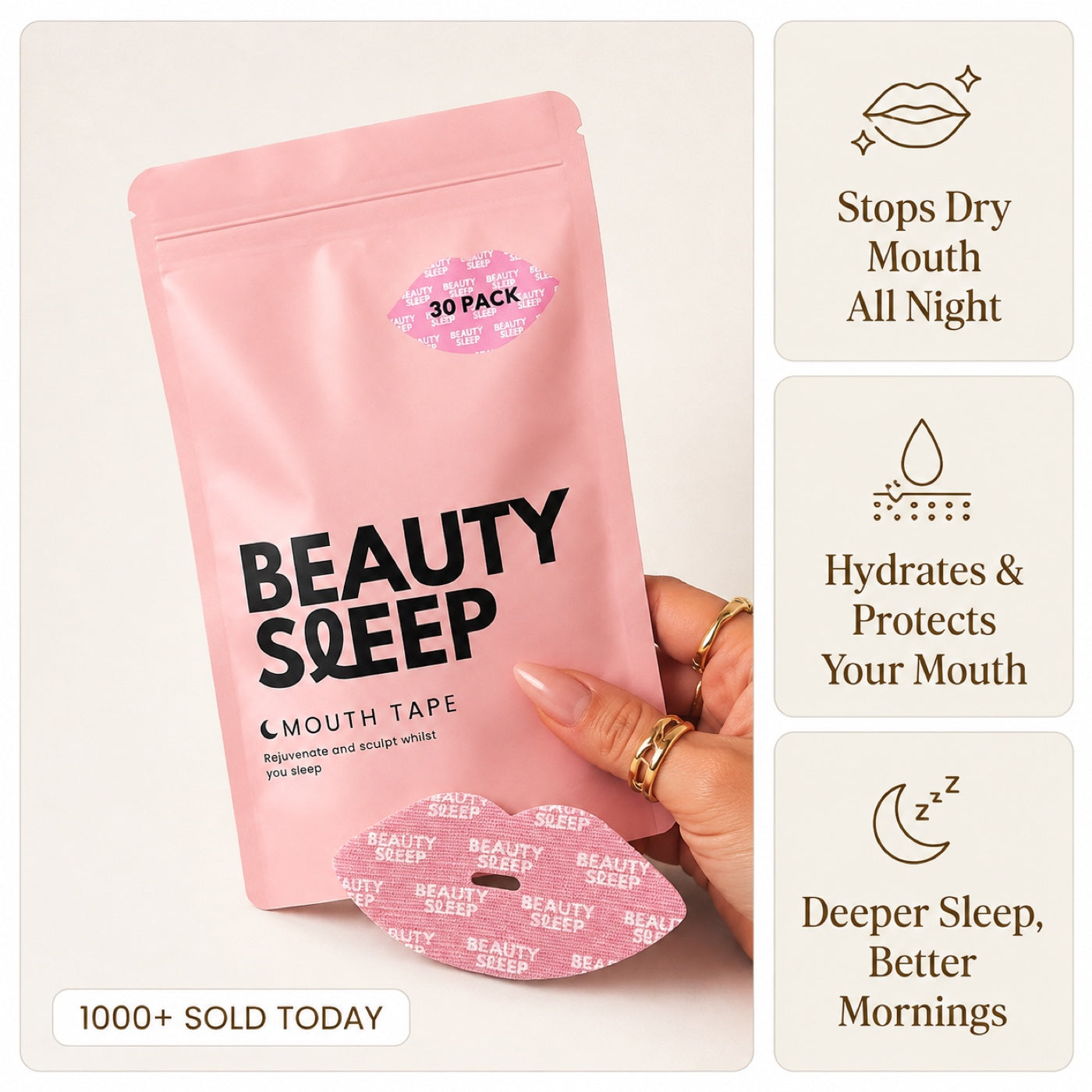
The entire routine takes around ten seconds:
Clean and dry the skin around your lips.
Apply the tape.
Go to sleep. That is it.

A ten-second habit, designed to address one of the most overlooked causes of morning dry mouth.
If you want to try it, Beauty Sleep is currently running a buy two, get two free deal — four packs, which is roughly what most women need to know whether the habit suits them.
What Women Often Notice
Every woman is different, and mouth tape is not a treatment for every cause of dry mouth. However, women who use Beauty Sleep regularly often report waking with:
Some women notice a difference after the first night. For others, it may take several nights to become comfortable with the new routine.
The key is consistency. When your mouth has been falling open for years, retraining your nighttime breathing habits may take time.
But compared with the cost and discomfort of ongoing dental work, this is one of the easiest nighttime habits to test.
“But I Already Brush And Floss”
Please keep brushing and flossing. Mouth tape does not replace good oral hygiene, professional dental care, fluoride or remineralising products recommended by your dentist, or treatment for an underlying medical condition.
Think of it as another layer of prevention.
You would not spend all day protecting your teeth and then deliberately leave them exposed to drying airflow for eight hours. Yet that is effectively what can happen when you sleep with your mouth open.
Brushing removes plaque. Flossing cleans between the teeth. Regular dental visits help catch problems early.
And helping the mouth remain closed at night may support the moist environment your teeth and gums naturally depend on.
Who Should Not Use Mouth Tape?
You should not use mouth tape when you cannot breathe freely through your nose. Do not use it during significant nasal congestion, after consuming excess alcohol or sedating medication, or if you feel nauseated or unwell. Mouth tape is not a substitute for assessment or treatment of sleep apnoea or another breathing disorder.
Speak with a doctor, dentist or sleep professional before using it if you:
Persistent dry mouth can also be associated with medications and medical conditions, so speak with a healthcare professional if symptoms continue.
Protecting Your Smile Starts Before More Damage Appears
One of the hardest parts of my job is explaining to a patient that a tooth can no longer be saved with a simple filling. By the time pain appears, the problem may already be advanced.
That is why prevention matters.
You do not have to wait until your next cavity.
You do not have to wait until your gums become more irritated.
And you do not have to accept waking up parched as a normal part of getting older.
When the problem is nighttime mouth breathing, the first step may be surprisingly simple: help your lips stay gently closed, encourage nasal breathing, reduce the airflow drying out your mouth — and give your teeth, gums and sleep a more protected environment every night.
